Ebook Download Walkable City: How Downtown Can Save America, One Step at a Time, by Jeff Speck
If a publication from popular author is presented, at some point numerous followers of them will directly buy guide. Also any type of book kinds, yet are they actually reading the book? Who understands? Therefore, we will reveal you a book by familiar writer entitled Walkable City: How Downtown Can Save America, One Step At A Time, By Jeff Speck This publication will certainly provide you some advantages if you actually reviewed it. The very first is you could get the new words as what we have actually not known concerning it formerly. We could also improve the international language from reading this book. There are any type of.
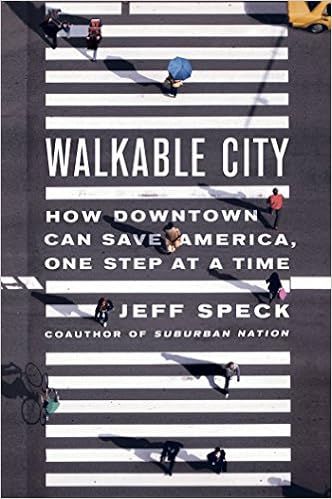
Walkable City: How Downtown Can Save America, One Step at a Time, by Jeff Speck

Ebook Download Walkable City: How Downtown Can Save America, One Step at a Time, by Jeff Speck
Required an aid to find the new launched publication? Never mind! Don't assume so hard since we are always in to assist you. Whoever you are, to find the book, from numerous countries, is currently simple. Here, we have the lots collections of numerous kinds and also categories of the books. The books are noted in soft data systems as well as you could locate the web link for each and every publication to download.
Why must be this e-book Walkable City: How Downtown Can Save America, One Step At A Time, By Jeff Speck to review? You will never get the expertise and also encounter without managing yourself there or trying by on your own to do it. Hence, reading this e-book Walkable City: How Downtown Can Save America, One Step At A Time, By Jeff Speck is required. You can be great and correct sufficient to obtain just how essential is reviewing this Walkable City: How Downtown Can Save America, One Step At A Time, By Jeff Speck Even you consistently check out by responsibility, you could sustain yourself to have reading e-book behavior. It will certainly be so helpful and fun after that.
Lots of people will feel so challenging when seeking the book from foreigner. The far range as well as difficult area to get the resources become the large troubles to face. Nonetheless, by visiting this site, you can locate Walkable City: How Downtown Can Save America, One Step At A Time, By Jeff Speck conveniently. Why? We are the collection based internet that come the million titles of guides from numerous countries. Just discover the search and also discover the title. Obtain additionally connect download when you have guide. If this publication is your choice, you could straight get it as yours
When visiting this page, you have determined that you will get this publication in quickly method, haven't you? Yeah, that holds true. You could quickly get the book here. By seeing this site, you could find the link to link to the collection as well as publisher of Walkable City: How Downtown Can Save America, One Step At A Time, By Jeff Speck So, you could obtain is as simple as feasible. It means additionally that you will not run out of this book. However, this site likewise brings you many more collections and classifications of publications from lots of sources. So, simply remain in this site whenever you will certainly seek for guides.
"Timely and important, a delightful, insightful, irreverent work . . . Should be required reading." ―The Christian Science MonitorA Best Book of the Year according to Planetizen and the American Society of Landscape Architects
Jeff Speck has dedicated his career to determining what makes cities thrive. And he has boiled it down to one key factor: walkability. Making downtown into a walkable, viable community is the essential fix for the
typical American city; it is eminently achievable and its benefits are manifold. Walk-
able City―bursting with sharp observations and key insights into how urban change
happens―lays out a practical, necessary, and inspiring vision for how to make American
cities great again.
Product details
Paperback: 320 pages
Publisher: North Point Press; Reprint edition (November 12, 2013)
Language: English
ISBN-10: 0865477728
ISBN-13: 978-0865477728
Product Dimensions:
5.4 x 0.9 x 8.2 inches
Shipping Weight: 9.6 ounces (View shipping rates and policies)
Average Customer Review:
4.7 out of 5 stars
185 customer reviews
Amazon Best Sellers Rank:
#32,030 in Books (See Top 100 in Books)
I often browse the nonfiction section (or the customers also bought lists) in search of new things to learn about. In the process of this, I have read boring books, misleading/inaccurate/biased books, books about off-the-wall/niche topics, and interesting books that have allowed me to learn about a topic I likely never would have touched otherwise. The Walkable City is probably the best book I have ever found as a result of this browsing.A relatively short but insightful book written by an experienced architect, The Walkable City lays out an evidence based case for having a walkable and bikeable downtown area that is illustrated throughout with explanations of case studies and anecdotal examples. Everything is fully explained (both a basic 'this is what _____ means' as well as 'these are the implications of ____'), which - having no knowledge of civil engineering or city planning - I very much appreciated. But, what I think really makes the book (especially as a learning tool for a general audience) is the inclusion of Speck's dry and admittedly sarcastic humor. I found it hilarious and a good counterbalance to heavier topics (such as dry jokes about traffic engineers during a section on pedestrian deaths due to traffic behavior as a result road construction). Overall, I am very pleased to have stumbled across The Walkable City and it is a book that I would be happy to reccomend.
I bought this book to help support an independent study project I needed to complete for a college-level class designed around Edward Glaeser's "Triumph of the City: How Our Greatest Invention Makes Us Richer, Smarter, Greener, Healthier, and Happier." I knew the book would help me develop a strong and effective PowerPoint lecture for the class on my topic of walkable cities, but I had no idea how delightful it would be to read this book straight through from beginning to end as a form of pleasure. Nor did I realize how much I would learn overall about the basics of urban design. Although this book is focused on how to make cities more walkable, it really served the purpose of being an engaging introduction to the whole field of urban and city planning.After reading Speck's book, I now see my own lovely city and the many thousands that I've visited here and abroad over my life in a completely new light. This book gives me a context within which to understand why certain cities attract me and others do not. It is as if I now have a language to clearly understand cities for the first time. Honestly, you know how good it feels when you get eyeglasses for the first time and see what the world really looks like? Well, that's what this book did for me. I now see cities in a whole new light.I only wish at this book could be read by my mayor, all my city councilmen, all the citizens on our planning commission, and all the citizens in my community that have the power to vote on our city's major land use initiatives.This book is getting almost consistent five-star ratings. I can do little more than join in and whole-heartedly agree.
A truly fascinating book, Speck makes you question how the United States moved so far away from the more ideal reality of walkability. Not only does Speck succeed in making the case for walkability, he provides a clear road plan for how streets can be reclaimed and thus cities made to be safer, healthier, more vibrant and ultimately more equitable places for all Americans. The level of research and time that was put into this book shows and the comprehensive nature speaks volumes about the author and his drive to improve life in American cities. A must read for all people interested in urban planning, public health, economics, or any other subject relating to public life.
This was a different book for me to read–one about urban planning. As the title implies, the author’s basic proposition is that large urban areas are most able to thrive if they are “walkableâ€. Walkability is much more than providing good spaces for pedestrians, it also stresses that people, and not autos, need to be the focus of our cities. (He does apply his theories to smaller cities, but my take is that most of his suggestions are really viable only in large metropolitan areas.) The book is full of information about planning, architecture, traffic engineers, and many other subjects. Like many non-fiction work, the author seems to have engaged in exhaustive research. Sometimes such exhaustive work makes for exhausting reading, and I did find that true at times. Indeed, this could be used almost as a supplemental text for educators or planners. Walkability, as I read the book, requires some level of mass transit to in essence “create†pedestrians in the urban core. Not that no one can drive, but the more people who don’t, the more people who are on the urban streets. “Walkability explains how, to be favored, a walk has to satisfy four main conditions: it must be useful, safe, comfortable and interesting.†These terms are themselves quite subjective, but the author defines useful to mean that “***most aspects of life are located close at hand and organized in a way that walking serves them wellâ€. Safe means “***that the street has been designed to give pedestrians a fighting chance against being hit by automobiles†. Comfortable means that “***buildings and landscapes shape urban streets into ‘outdoor living rooms’â€, and interesting means “***that sidewalks are lined by unique buildings with friendly faces and that signs of humanity abound.†An example he gives of a city that lacks almost all technical aspects of walkability–good sidewalks, safe traffic, etc- but is wonderfully walkable because of being so interesting, is Rome. Anyone who has been there can appreciate the example. His basic premise is that walkablilty attracts creative people to our cities, enhancing both the culture and the economy, including the increased property values in walkable cities, as well as healthy citizens who walk or ride bikes more often. (As an aside, the author speaks a lot of Portland, Oregon-50 miles north of me-, and its commitment to walkability.) Despite the ascribed benefits of walkability, the author posits that over the last 60 years, our country has made the automobile the master of the urban environment–and the environment in general. To create, or perhaps restore walkability, the car has to relegated to its position of servant rather than master. This can be done in many ways, including getting the parking issues right, and to the benefit of pedestrians. He also notes, as mentioned above, that walkable cities must have transit. Indeed, he points out that one need only trace the relative investment in highways versus transit in American and Canadian cities to see why the latter, who invested less in highways, have more walkable, and to the author, more vibrant cities. The author goes into detail abut a great many subjects, but I will only explore one–traffic engineers. He does have a distinct bias against traffic engineers, saying most are trained to solve traffic problems, and thus the first step, at least for them, in solving every urban problem is to conduct a traffic study–usually aimed at how to better move traffic. He feels such studies are flawed for three reasons. First the computer models are flawed because, like all computer models they are only as good as the input; second, traffic studies are typically performed by firms that do traffic engineering; and third, traffic studies almost never consider what the author calls “induced demandâ€. The last consideration is very interesting, for the author, supported by studies, postulates that induced demand reflects the fact that increasing the supply of roadways lowers the “time cost†of driving, causing more people to drive, obliterating any reductions in congestion. In essence, investments in road capacity expansion do not ease congestion, but just add more cars to the highway. This is at first a bit counterintuitive, but, with a second thought, has a logical ring. If induced demand is a viable theory, then it has a doubly negative effect. It not only fails to reduce congestion, it adds more cars into the mix, reducing the possibility for walkability. So is congestion good? Contrary as it sounds, the answer might be “yesâ€. Indeed, the author notes that 7 of the 10 cities ranked worst for traffic also had “***excellent public transportation and a vast collection of walkable neighborhoodsâ€. (The 3 that did not were Dallas, Houston and Atlanta.) Also, if induced demand is correct, why bother with spending fortunes to expand highways if you will end up with congestion anyway. I fund the whole “induced demand†scenario quite thought provoking. This is not a “beach bookâ€, or any type of “relaxing readâ€. It’s full of facts, theories and a bit of technical jargon. It is also quite informative and enlightening if one is interested specifically in urban planning, or more generally in reducing automobiles, increasing pleasant walkable urban environments, and making our cities more enjoyable for their residents.
Walkable City: How Downtown Can Save America, One Step at a Time, by Jeff Speck PDF
Walkable City: How Downtown Can Save America, One Step at a Time, by Jeff Speck EPub
Walkable City: How Downtown Can Save America, One Step at a Time, by Jeff Speck Doc
Walkable City: How Downtown Can Save America, One Step at a Time, by Jeff Speck iBooks
Walkable City: How Downtown Can Save America, One Step at a Time, by Jeff Speck rtf
Walkable City: How Downtown Can Save America, One Step at a Time, by Jeff Speck Mobipocket
Walkable City: How Downtown Can Save America, One Step at a Time, by Jeff Speck Kindle